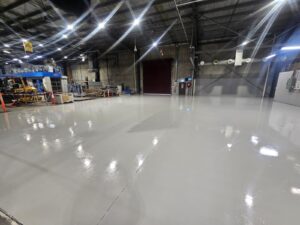
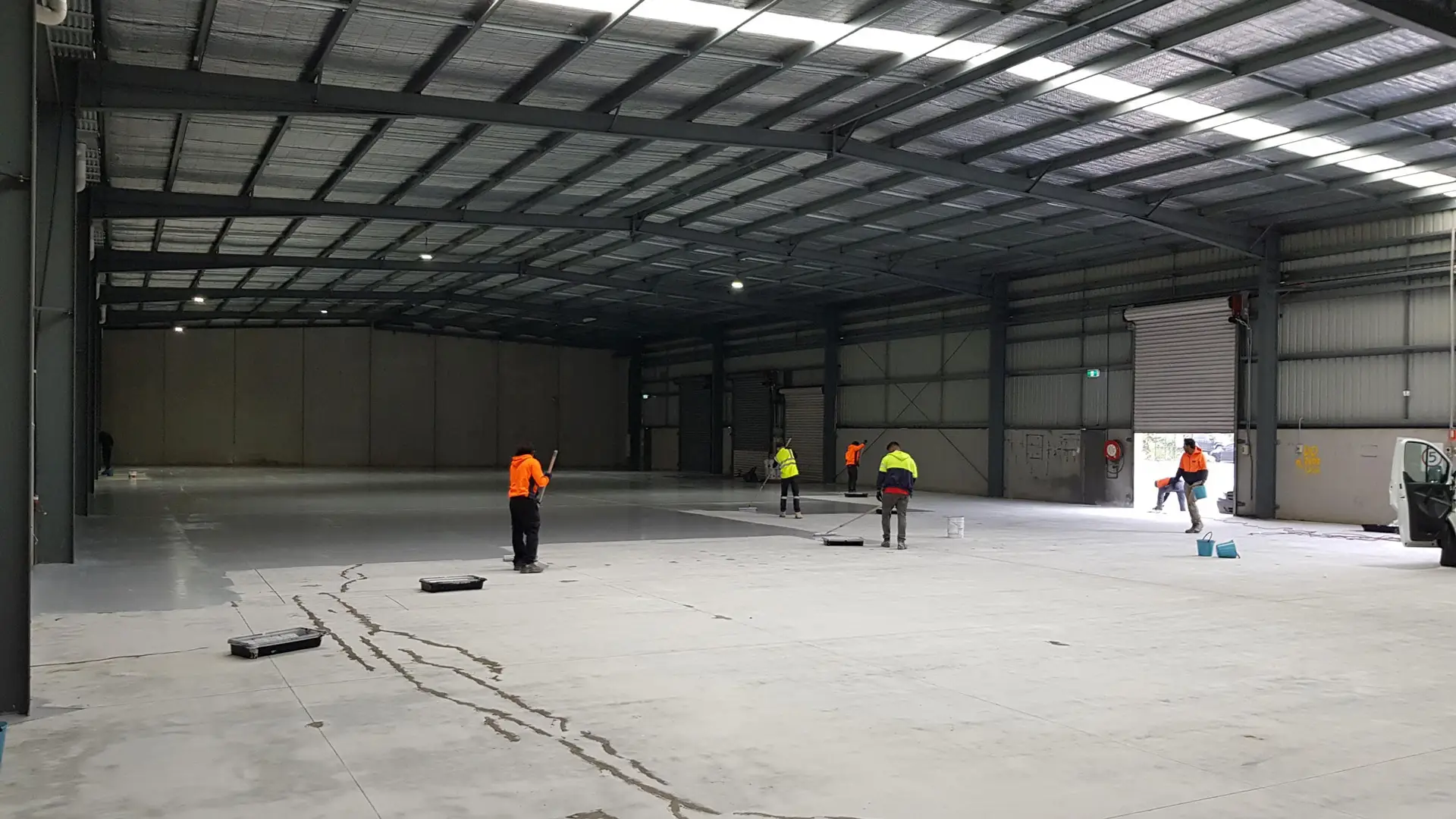
A concrete floor that has seen years of heavy use does not always need to be replaced. In many cases, resurfacing is a more practical, more cost effective, and less disruptive solution that restores the floor to a safe, functional, and compliant condition without the cost and operational impact of full slab replacement.
For property managers, facility managers, and building owners across Melbourne, understanding what concrete resurfacing actually involves, when it is the right solution, and what the process looks like is the starting point for making a sound decision about a deteriorating floor.
What Is Concrete Resurfacing?
Concrete resurfacing is the process of applying a new surface layer to an existing concrete substrate to restore its condition, appearance, and performance. Rather than removing and replacing the existing slab, resurfacing works with what is already there, applying a bonded overlay or coating system that addresses the surface deterioration while leaving the structural slab intact.
The resurfacing system used depends on the condition of the existing substrate, the operational demands the floor needs to meet, and the specific problems being addressed. Options range from thin-film coating systems for floors with surface wear and minor deterioration, through to thicker polymer-modified overlays for floors with more significant surface damage, cracking, or unevenness.
What resurfacing is not is a cosmetic patch over a fundamentally compromised substrate. A floor with structural problems beneath the surface, active moisture movement, or widespread contamination that has penetrated the slab needs those issues addressed before resurfacing is applied. Resurfacing over an unresolved problem produces a result that looks good initially and fails prematurely.
When Resurfacing Is the Right Solution
The decision between resurfacing and full slab replacement is one of the most consequential a facility manager makes about their floor. Getting it right requires an honest assessment of the substrate condition, not just the surface.
Resurfacing Is Appropriate When:
The concrete substrate is structurally sound. If the slab beneath the surface deterioration is intact, properly bonded, free of active structural movement, and not compromised by moisture damage at depth, resurfacing is a viable and cost effective solution.
The damage is primarily at the surface level. Spalling, surface cracking, worn coatings, scaling, and surface contamination that has not penetrated deeply into the substrate are all conditions resurfacing addresses effectively.
The floor has coating failure but sound concrete below. When an epoxy or resin coating has failed but the concrete beneath it is in good condition, resurfacing with a new coating system after correct preparation restores the floor to full performance without the cost of slab replacement.
The operational demands of the facility have changed. A floor that was adequate for its original use but no longer meets the demands of a changed operation, heavier traffic loads, or different chemical exposure can be upgraded through resurfacing with a system matched to the new requirements.
Resurfacing Is Not Appropriate When:
The substrate has been structurally compromised. Active slab movement, widespread delamination of the substrate itself, or structural damage from overloading or ground movement means the slab needs to be addressed before any surface treatment will hold.
Moisture in the slab is unresolved. Resurfacing over a slab with active moisture movement produces the same blistering and delamination failure that caused the original floor to deteriorate. Moisture must be properly assessed and treated before resurfacing proceeds.
The extent of surface damage makes resurfacing uneconomical. When damage is so widespread or deep that the preparation required approaches the cost of replacement, a replacement may deliver better long-term value.
A professional substrate assessment before committing to resurfacing is not optional. It is the step that determines whether the resurfacing investment delivers a floor that lasts or a floor that fails again within a few years.
The Resurfacing Process for Commercial and Industrial Floors
Surface Preparation
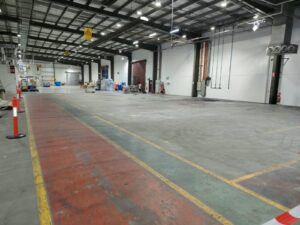
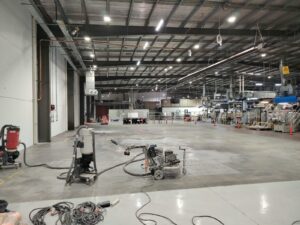
Surface preparation is the foundation of a successful resurfacing project. The existing surface must be mechanically profiled to create the bond strength the overlay system requires. For most commercial and industrial resurfacing projects this means diamond grinding or shot blasting to remove the failed surface layer, open the concrete pores, and create a consistent surface profile across the entire floor area.
Any cracks, joints, or surface defects identified during preparation are treated before the overlay is applied. Applying resurfacing material over untreated cracks transfers those cracks directly into the new surface layer, producing the same failure in the same location.
Concrete grinding and surface preparation for Melbourne commercial and industrial facilities carried out to the correct standard is what separates a resurfacing project that delivers a decade of service from one that begins to fail within the first year.
Moisture Testing
Moisture testing is conducted after surface preparation to confirm the substrate moisture content falls within the acceptable range for the overlay system being applied. This step is non-negotiable regardless of how dry the surface appears. Concrete can carry significant internal moisture with no visible surface indication, and applying a resurfacing system over a slab with excessive moisture content produces delamination that no amount of product quality or application skill can prevent.
Overlay Application
The resurfacing overlay is applied in the specified thickness, using the appropriate application method for the system selected. Depending on the product and the surface condition being addressed, this may involve a primer coat, a base coat, aggregate broadcast where slip resistance is required, and a topcoat that provides the surface finish and protective properties the facility requires.
For commercial and industrial applications, the overlay system is selected based on the traffic demands, chemical exposure, slip resistance requirements, and surface finish specification of the facility rather than a generic product applied uniformly across all situations.
Cure and Return to Service
The resurfaced floor is allowed to cure to the specification of the overlay system before any traffic or operational activity resumes. Return to service timelines vary between systems and are affected by ambient temperature and humidity at the time of application. A professional installation team specifies a realistic return to service timeline based on actual site conditions rather than a generic cure time from a product data sheet.
Concrete Resurfacing for Specific Facility Types in Melbourne
Warehouse and Distribution Facilities
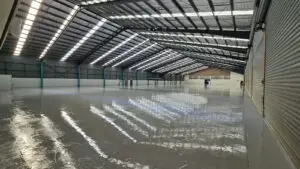
Warehouse floors in Melbourne‘s industrial precincts face demanding conditions that standard concrete surfaces deteriorate under over time. Heavy forklift traffic, point loads from racking, and years of operational use produce surface wear, cracking, and coating failure that resurfacing addresses effectively where the substrate remains sound.
The resurfacing specification for a warehouse or distribution facility typically prioritises surface hardness and abrasion resistance to withstand ongoing heavy traffic, with anti-slip properties in pedestrian zones and areas near loading docks. Commercial and industrial floor maintenance and resurfacing for warehouse facilities is scheduled around operational requirements to minimise downtime.
Strata Car Parks and Common Areas
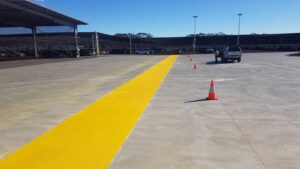
Concrete resurfacing in strata car parks and common areas across Melbourne addresses the progressive surface deterioration that occurs in these environments, particularly in older buildings where the original concrete finish has worn beyond the point where cleaning and maintenance alone can restore it.
Car park resurfacing typically includes crack treatment, surface preparation, and application of a durable overlay that restores a clean, even, safe surface across the car park floor and associated pedestrian areas. For strata buildings, work is scheduled to maintain access to at least part of the car park during the resurfacing process wherever the layout allows.
Retail and Commercial Premises
Retail floor resurfacing addresses the worn, stained, and deteriorated concrete surfaces that develop in high foot traffic commercial environments. The resurfacing specification for retail premises balances durability with appearance, producing a surface that holds up under ongoing commercial use while presenting well to customers and tenants.
Aged Care and Healthcare Facilities
Resurfacing in aged care and healthcare facilities requires specific attention to slip resistance compliance under AS/NZS 4586, seamless surface finishes that support infection control cleaning regimes, and scheduling that minimises disruption to residents and patients. These requirements drive a specific resurfacing specification that differs from standard commercial applications.
Food Processing and Commercial Kitchens
Resurfacing in food processing and commercial kitchen environments requires chemically resistant overlay systems that withstand aggressive cleaning chemicals, seamless finishes with no grout lines or joints, and slip resistance ratings appropriate for wet and oil-contaminated conditions. Concrete maintenance and repair for commercial kitchens and food processing facilities is carried out during planned shutdown periods to avoid any interference with food production or service.
What Melbourne Concrete Resurfacing Actually Costs
Cost is facility-specific and depends on the floor area, the extent of preparation required, the overlay system specified, and the access and scheduling constraints of the project. What can be said with confidence is that resurfacing costs significantly less than full slab replacement in almost all cases where the substrate is structurally sound, and that the cost difference between resurfacing at the right time and deferring until full replacement becomes necessary is almost always substantial.
A professional assessment will provide an accurate cost picture for your specific facility. What a general cost figure cannot capture is the value of getting the specification right the first time, which determines whether the resurfacing investment delivers five years of service or fifteen.
Working With a Certified Resurfacing Specialist
Floor Maintenance Solutions holds the MSF30822 Certificate III in Flooring Technology and carries out commercial and industrial concrete resurfacing projects across Melbourne and Victoria. Our assessment process establishes the substrate condition, identifies the correct preparation and overlay specification for each facility’s specific requirements, and delivers resurfacing work that performs under the real demands of the environment it is installed in.
Contact Floor Maintenance Solutions for a free site assessment of your Melbourne facility. We will assess your concrete substrate honestly, confirm whether resurfacing is the right solution, and give you a clear specification and cost for getting it done properly.
Find out more about our concrete maintenance and repair services for Melbourne facilities.