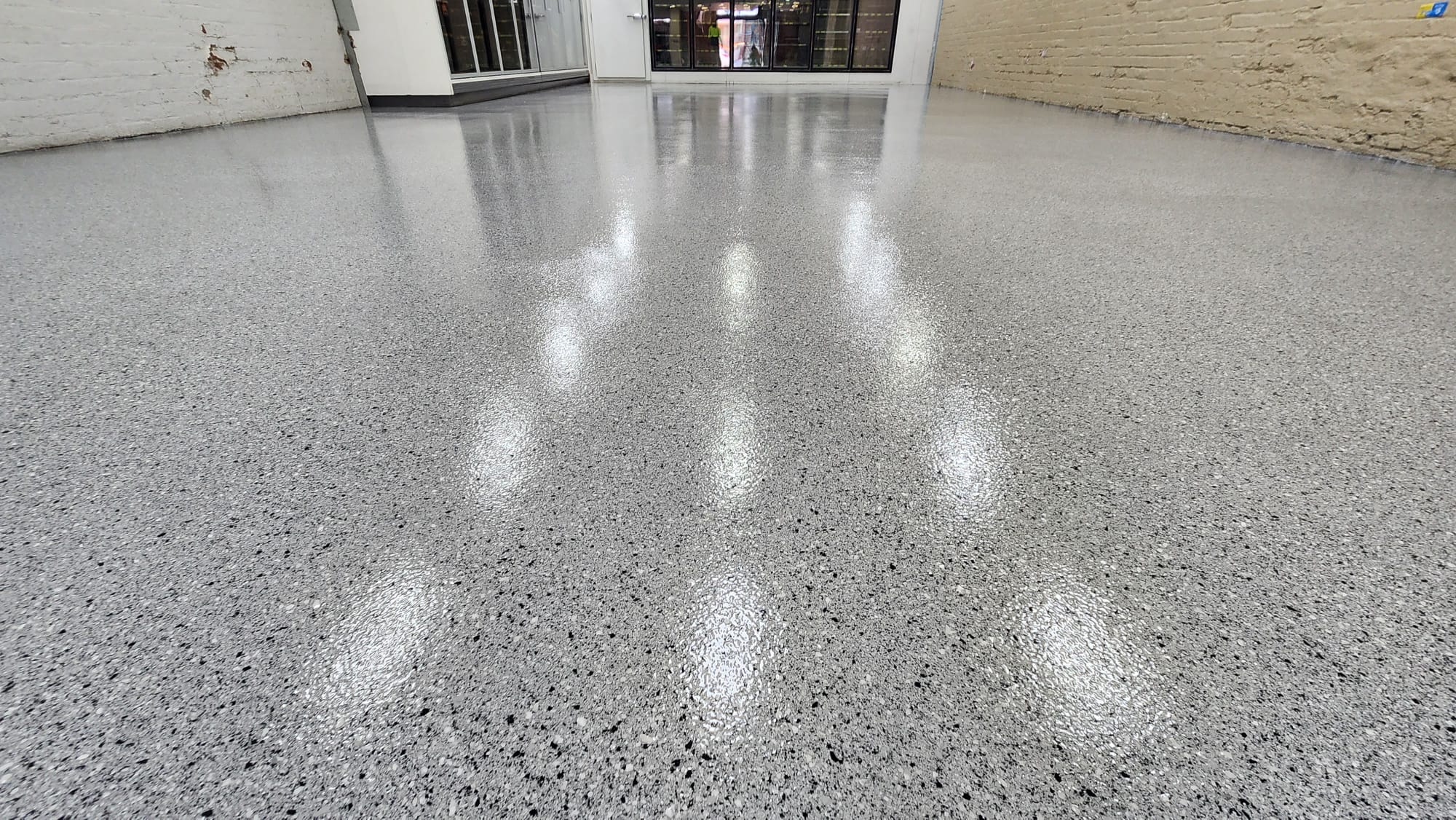
If you’ve ever seen an epoxy floor peel, blister, or delaminate within months of installation, surface preparation is almost certainly where the job went wrong. It’s the step that’s least visible once the coating goes down and the one most commonly rushed, cut short, or skipped entirely when a contractor is under pressure on cost or timeline.
The quality of an epoxy floor installation is determined before a single drop of coating touches the surface. Everything that follows the product, the system, the application relies entirely on the foundation that surface preparation creates. Get it right and a well-specified epoxy system will perform for a decade or more. Get it wrong and no amount of product quality will save it.
What Surface Preparation Actually Involves
Surface preparation for epoxy flooring is the process of mechanically profiling the concrete substrate to create the conditions needed for a strong, lasting bond. It’s not cleaning. It’s not degreasing alone. It’s the physical modification of the concrete surface to make it receptive to coating adhesion.
In practice, effective surface preparation for an industrial or commercial epoxy installation involves a combination of the following:
Diamond Grinding
Diamond grinding uses rotating diamond-tipped tooling to remove the top layer of the concrete surface, open the concrete pores, and create a consistent surface profile across the entire floor area. It removes existing coatings, surface hardeners, adhesive residues, and minor surface irregularities while producing the mechanical texture that epoxy needs to bond to.
The surface profile produced by grinding is measured against the International Concrete Repair Institute’s CSP scale, a standardised system that defines the texture depth required for different coating systems. A light decorative epoxy may require a CSP of 2–3. A heavy-duty industrial system may require CSP 4 or higher. Matching the preparation to the coating system is a technical decision, not a judgement call made on the day.
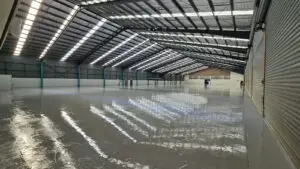
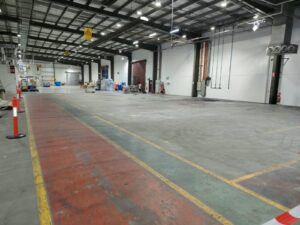
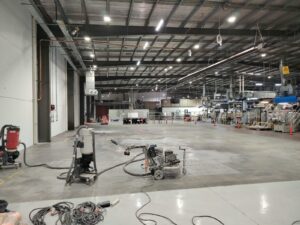
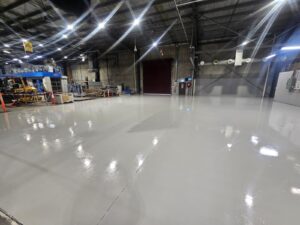
Concrete grinding and surface preparation
Shot Blasting
Shot blasting propels steel shot at the concrete surface at high velocity, removing contaminants and creating a surface profile simultaneously. It’s particularly effective in large open floor areas and produces a consistent, measurable profile across wide spans of concrete.
In heavily contaminated industrial environments, workshops, manufacturing facilities, and food processing plants where oils, chemicals, and process residues have penetrated the concrete over years, shot blasting is often the preferred preparation method because it removes contamination to a depth that grinding alone cannot reach.
Crack and Joint Repair
Surface preparation isn’t limited to profiling. Any cracks, joint damage, spalling, or surface defects in the concrete must be assessed and treated before coating proceeds. Applying epoxy over an untreated crack doesn’t seal it, it transfers the movement to the coating above, producing a crack in the epoxy that mirrors the one beneath.
Proper crack treatment, joint filling, and substrate repair carried out as part of professional concrete floor repairs and preparation ensures that the substrate the epoxy bonds to is structurally sound, not just visually acceptable.
Moisture Testing
Concrete moisture testing is a non-negotiable step in any professional epoxy floor installation. Moisture vapour moving through a concrete slab and encountering a sealed epoxy coating creates hydrostatic pressure at the bond line, the primary mechanism behind blistering, bubbling, and delamination failures.
The ASTM F2170 in-situ relative humidity test and the calcium chloride test (ASTM F1869) are the two most widely used methods for quantifying moisture in a concrete slab prior to coating. A slab that reads above the coating manufacturer’s specified moisture threshold requires either a moisture mitigation treatment or a moisture-tolerant primer system before coating can proceed.
Skipping moisture testing on the basis that the slab looks dry is one of the most expensive shortcuts in the flooring industry. Concrete can carry excessive internal moisture with no visible surface indication whatsoever.
Why Inadequate Preparation Is So Common
The honest answer is economics. Thorough surface preparation takes time, requires specialist equipment, and adds cost to a job. In a competitive tendering environment, contractors who cut preparation short can submit lower prices and clients who don’t know what proper preparation involves have no way to identify the difference until the floor fails.
A quote that includes thorough diamond grinding, shot blasting where required, crack repair, and moisture testing will always cost more upfront than one that includes a quick grind and a coat. But the floor that results from proper preparation will last five to ten times longer than one applied over an inadequately prepared substrate.
Understanding what to look for when comparing epoxy flooring installation quotes specifically what surface preparation is included and how it’s specifie, is the most important factor in determining whether a flooring investment will perform as expected or fail prematurely.
The Direct Relationship Between Preparation and Coating Performance
Every failure mode in epoxy flooring has a preparation-related root cause:
Delamination — the coating separates from the substrate because the mechanical bond was insufficient. Root cause: inadequate surface profile, contamination not fully removed, or moisture in the slab at the time of application.
Blistering and bubbling — moisture vapour pressure builds beneath the coating and forces it away from the surface. Root cause: moisture testing not conducted or moisture thresholds not met before coating.
Cracking — the coating cracks along lines that mirror defects in the substrate beneath. Root cause: cracks and joints not properly treated before coating was applied.
Peeling at edges and joints — the coating lifts from the edges and joint lines first, where preparation is most difficult and most commonly insufficient. Root cause: inadequate profiling at edges, or joints not properly treated.
In each case, the failure is a preparation failure — not a product failure. The coating performed exactly as physics dictated it would, given the substrate it was applied to.
What Separates a Professional Preparation from a Rushed One
A professional surface preparation process for an industrial epoxy installation includes a documented assessment of the substrate condition before any mechanical work begins, identifying existing coatings, contamination, cracks, moisture readings, and surface hardness. This assessment determines the preparation method, the required surface profile, and any substrate treatment needed before coating proceeds.
The preparation work itself is carried out with calibrated equipment capable of achieving a consistent, measurable surface profile across the entire floor area. The result is verified visually and with testing before any primer or coating is applied.
This process takes longer and costs more than a quick grind-and-coat. It also produces a floor that performs as specified for its intended service life which is the only outcome that matters from a facility manager’s perspective.
Floor Maintenance Solutions carries out all concrete surface preparation for epoxy and industrial floor coating installations using professional-grade diamond grinding and shot blasting equipment, with mandatory moisture testing on every project. We don’t apply coatings to surfaces that aren’t ready because the cost of a failed floor is always higher than the cost of doing the preparation properly.
The Question Worth Asking Before Any Epoxy Installation
Before committing to any epoxy flooring installation, ask the contractor to specify exactly what surface preparation is included the method, the target surface profile, the moisture testing protocol, and how substrate defects will be treated. A contractor who can answer these questions specifically and in detail is one who understands what they’re doing. One who can’t is one who is likely to cut corners where you can’t see them.
The floor you get is the floor that was prepared. Everything else is just coating on top.
Floor Maintenance Solutions provides free site assessments across Melbourne and Victoria, evaluating your substrate condition, identifying preparation requirements, and specifying the right system for your facility and operational environment. Contact us today before your next flooring project to make sure it’s done right from the ground up.