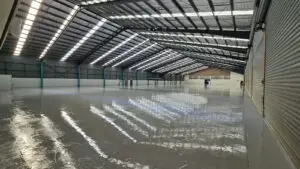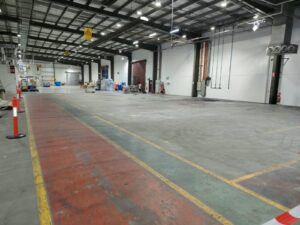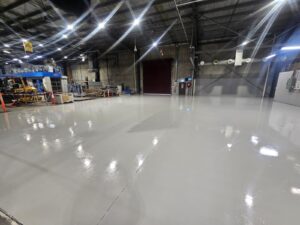
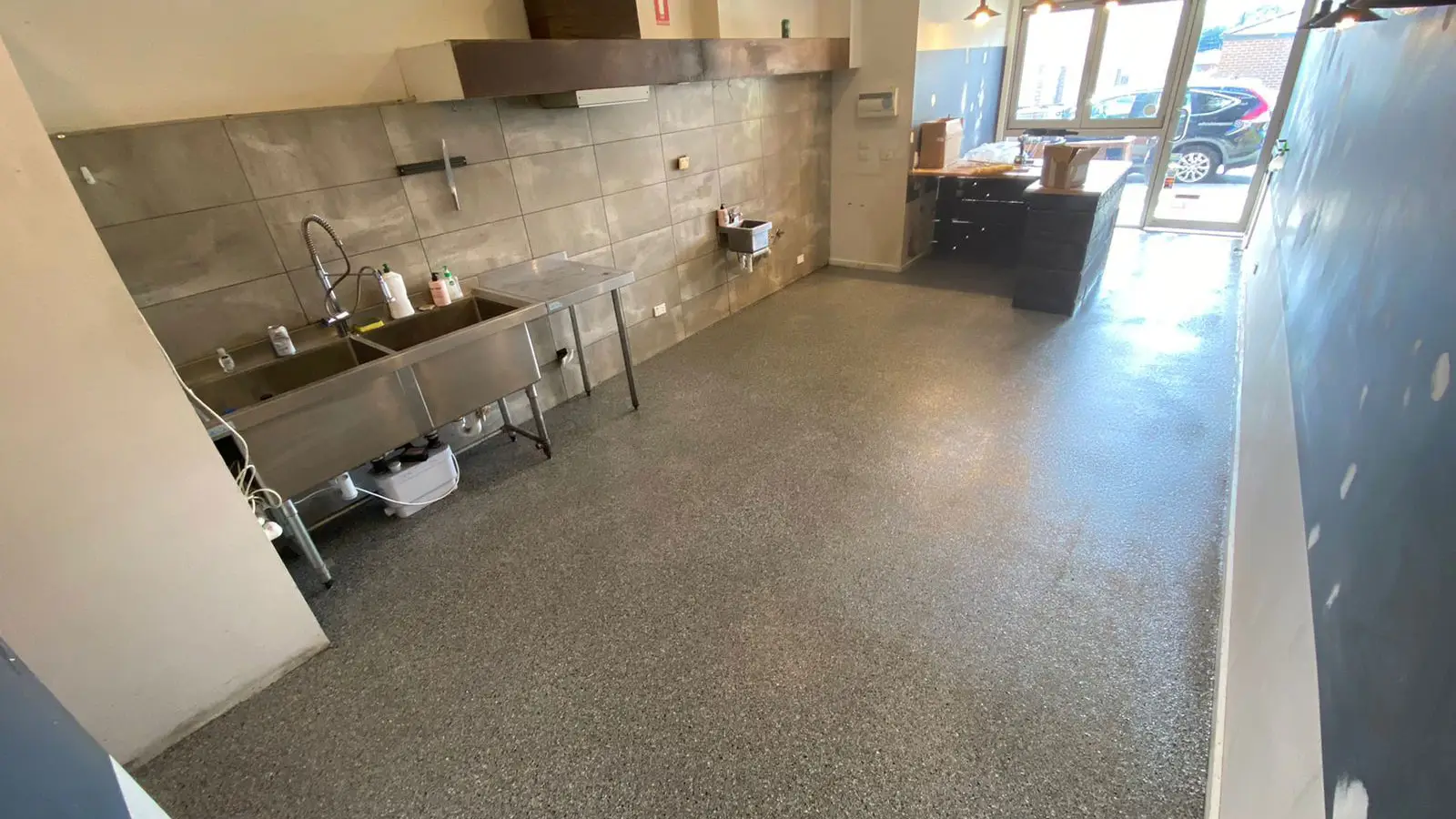
Commercial kitchen floors work harder than almost any other surface in a building. Constant water exposure, hot oil spills, aggressive cleaning chemicals, heavy foot traffic during service, and strict hygiene requirements all combine to create one of the most demanding flooring environments in any commercial setting. Most kitchen operators inherit a floor when they take over a venue and rarely think about it again until something goes wrong a slip, a crack, a section that’s started to break down under the fryer station.
By the time a kitchen floor problem becomes visible, it’s usually been developing for a while. Understanding what commercial kitchen floors actually need and what most operators miss is the difference between a floor that quietly does its job for a decade and one that becomes a recurring source of risk and cost.
Why Commercial Kitchen Floors Fail Differently to Other Commercial Spaces
A retail floor or office floor deals with foot traffic and the occasional spill. A commercial kitchen floor deals with constant water exposure, hot fat and oil, acidic food residue, steam, temperature cycling from ovens and walk-in coolers, and daily high-pressure cleaning with industrial-strength degreasers.
Standard commercial flooring and even some entry-level epoxy systems simply isn’t built to withstand this combination of stresses long-term. The floor that works perfectly well in a retail fitout next door can deteriorate rapidly once installed in a kitchen environment, because the conditions are fundamentally different.
What Most Kitchen Operators Miss
The Floor Was Specified for the Wrong Environment
A significant number of commercial kitchen flooring problems trace back to a single root cause: the floor system installed wasn’t actually rated for commercial kitchen use. Generic epoxy or tile systems installed during a fast fitout often prioritise appearance and upfront cost over chemical resistance and slip performance under wet, greasy conditions.
The fix isn’t always full replacement. In many cases, a chemically resistant resin flooring system designed for commercial kitchen environments can be installed over the existing substrate provided it’s properly assessed first giving the kitchen a floor actually built for what it faces daily.
Slip Resistance Isn’t a One-Time Installation Outcome
Many operators assume that because the floor was slip-rated when installed, it remains that way indefinitely. It doesn’t. Daily exposure to oil, grease, and high-pressure cleaning gradually wears down the texture that provides grip meaning a floor that met AS/NZS 4586 slip resistance requirements on day one can fall below that standard within a few years of heavy kitchen use.
This is one of the most overlooked risks in hospitality venues, because the floor still looks the same to the eye while its actual slip performance has quietly degraded.
Grout Lines and Joints Are a Hygiene and Hazard Liability
Tiled kitchen floors are common, but grout lines create two persistent problems: they harbour bacteria and food residue that’s genuinely difficult to clean to food safety standards, and they wear unevenly, creating small trip points and areas where tiles can crack or lift over time.
Seamless resin flooring systems eliminate this issue entirely no grout lines, no joints for bacteria to collect in, and a continuous surface that’s far easier to maintain to commercial kitchen hygiene standards.
Drainage and Floor Falls Get Overlooked
Kitchens generate significant water volume from cleaning, cooking processes, and equipment. If the floor doesn’t have adequate fall toward drainage points, water pools creating both a slip hazard and conditions that accelerate floor and grout deterioration. This is frequently a design oversight from the original fitout rather than something that develops over time, but it’s rarely addressed until it causes an obvious problem.
Heat Exposure Near Cooking Equipment Is Underestimated
Areas directly around fryers, griddles, and ovens experience localised heat and thermal cycling that standard flooring isn’t designed to handle. Over time, this can cause specific zones of the floor to deteriorate faster than the rest of the kitchen — a pattern that’s easy to dismiss as general wear when it’s actually a specification issue for that zone.
What a Properly Specified Commercial Kitchen Floor Looks Like
A floor system genuinely suited to commercial kitchen use typically includes:
- Seamless application with no grout lines or joints for bacteria and residue to collect in
- Chemical resistance to oils, fats, and the cleaning agents used in daily kitchen sanitation
- Anti-slip texture rated to meet AS/NZS 4586 wet area requirements and maintained at that standard over time
- Heat tolerance appropriate for zones near cooking equipment
- Correct floor falls directing water efficiently to drainage points
- Easy-clean finish that supports food safety compliance without requiring aggressive abrasive cleaning that accelerates wear
How to Tell If Your Kitchen Floor Needs Attention
- Surface feels noticeably less grippy underfoot when wet compared to when it was new
- Visible cracking, chipping, or lifting in any section of the floor
- Grout lines (if tiled) showing discolouration that doesn’t clean away
- Pooling water that doesn’t drain efficiently after cleaning
- Any area near cooking equipment showing different wear to the rest of the floor
If any of these sound familiar, the floor is worth a professional assessment before the issue progresses into a compliance or safety problem during a health inspection or insurance review.
Getting It Right for Your Kitchen
Floor Maintenance Solutions works with cafes, restaurants, and commercial kitchens across Melbourne and Victoria to assess existing floor conditions and install resin flooring systems specifically suited to commercial kitchen environments chemically resistant, properly slip-rated, and seamless for genuine hygiene compliance.
Contact Floor Maintenance Solutions for a free site assessment of your kitchen floor. We’ll tell you honestly whether it’s performing the way it should and what your options are if it isn’t.